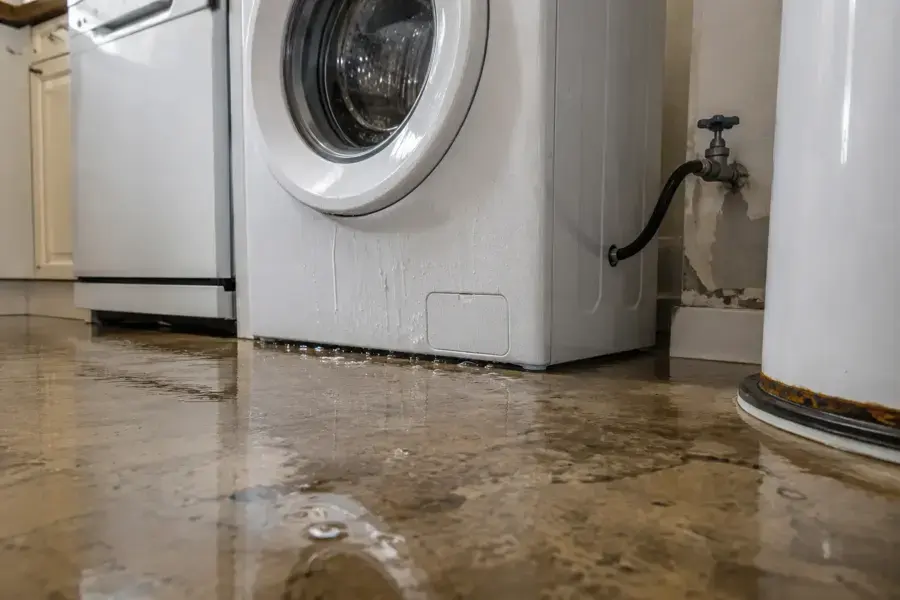
Supply lines are the small hoses and tubes that feed washers, dishwashers, refrigerator ice makers, toilets and sinks. They fail quietly: a rubber washer hose bulges and bursts, a plastic ice-maker line cracks behind the fridge, a toilet supply coupling splits. Because the hose runs at household water pressure, a failure while you are at work or asleep can put hundreds of gallons on the floor. In Hyattsville garden apartments and condos, that water often ends up in the unit below.
The lines that fail most
- Rubber washing machine hoses, especially ones older than five years
- Plastic refrigerator and ice-maker lines pinched behind the fridge
- Dishwasher supply and drain connections under the sink cabinet
- Toilet and faucet supply couplings in bathrooms
How appliance leak damage is dried
The extraction crew removes standing water, then the tech who does the walkthrough maps the floor, the cabinet bases, the toe kicks and the walls around the appliance. Water under kitchen cabinets and under vinyl or laminate flooring does not dry on its own. The drying team often removes toe kicks and drills small vent holes to push dry air under cabinets, uses floor drying systems where the flooring allows, and runs dehumidifiers until the subfloor and cabinet bases reach a dry reference.
Washer and dishwasher water is gray water
A clean supply line starts as Category 1. Water from a washer drain or a dishwasher drain carries soap and soil and is Category 2 from the start, which changes what can be kept.
Stacked units and laundry rooms
Upper-floor laundry closets are one of the most common causes of a ceiling leak in the unit below. For a failed tank, see water heater failure cleanup. Braided stainless hoses, a leak sensor under the washer and closing the washer valves before a trip prevent many of these losses. For simple leak checks around the house, see EPA WaterSense Fix a Leak Week, and for product safety notices on appliances, see the Consumer Product Safety Commission recalls page.