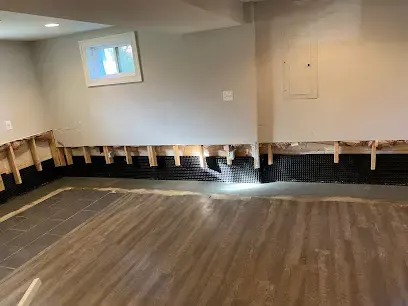
Hyattsville grew as a streetcar suburb, and a large share of its homes still sit on brick or fieldstone foundations built long before modern waterproofing. Add the clay-rich soil of this part of Prince George's County, which holds rain against the walls, and a heavy storm can push water through mortar joints, up through floor drains and under basement stairwell doors all at once. The restoration team treats a flooded basement as a structural drying job, not a mopping job.
Why Hyattsville basements flood
- Saturated clay soil pressing water through old mortar and block after a long rain
- Exterior basement stairwell drains that clog with leaves, so rain pours under the door
- Floor drains that back up when the sewer lateral or public main is overloaded, covered on the sewage backup page
- A failed sump pump or a burst supply line in an unfinished corner
How the basement is cleaned up and dried
The extraction crew pumps the standing water, then the tech who does the walkthrough maps moisture across the slab, the walls and the framing of any finished rooms. Wet carpet pad, soaked insulation and swollen baseboard come out. Drywall is cut above the wet line only where the meters say it is wet, and masonry gets its own drying plan, because brick and stone release water slowly and need steady dehumidification rather than a quick fan-out.
Masonry dries on its own schedule
Brick, stone and block are Class 4 materials: dense and slow to give up moisture. The drying team often adds desiccant dehumidifiers and keeps the space closed, and the equipment stays until the readings match a dry reference, not until the floor looks dry.
Finished basements and what can be saved
Many basements in University Hills, Cheverly and West Hyattsville are finished living space. When the water is clean and extraction starts early, framing, subfloor and sometimes carpet can be dried in place. When the water came from a drain or a storm, porous finishes it touched are removed and the area is cleaned before drying. For flood preparation, the National Weather Service flood safety page is a good reference, and University of Maryland Extension covers home moisture topics for Maryland homeowners.