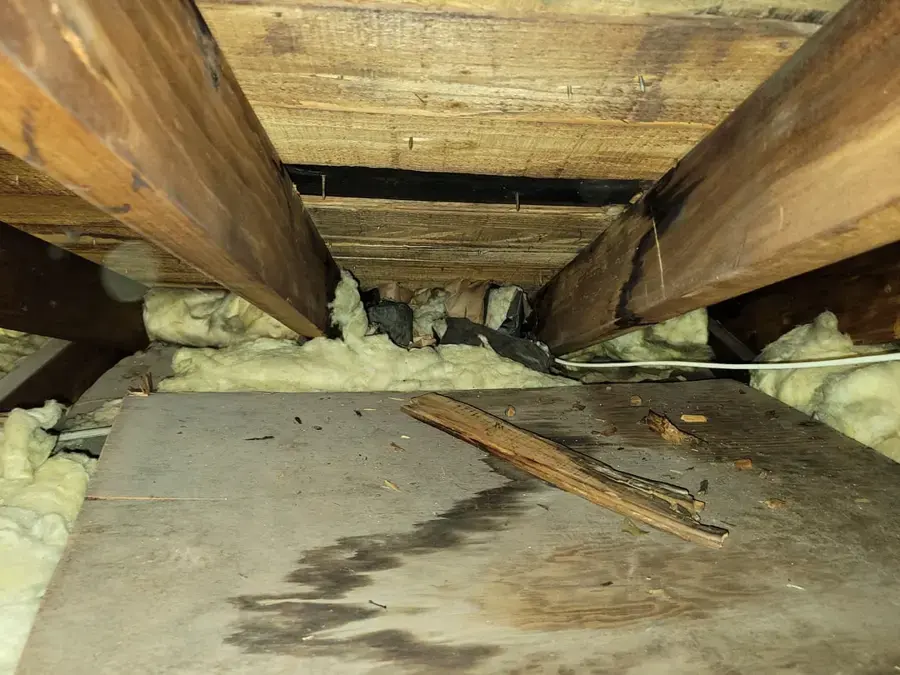
Many Hyattsville homes carry roofs that are older than the people living under them: slate on Victorian and Queen Anne houses in the historic district, low-slope roofs on porches and additions, and brick chimneys whose flashing has been patched more than once. A late-summer storm or the remnants of a tropical system can drive rain sideways under shingles and around chimneys, and the water shows up as a stain on the top-floor ceiling or a damp spot running down a wall.
Where roof water gets in
- Chimney and wall flashing that has cracked or pulled away from old brick
- Broken or slipped slates, and worn shingles on older roofs
- Low-slope porch and addition roofs where water ponds instead of running off
- Gutters clogged with leaves from the old tree canopy, so water backs up under the roof edge
How roof leak damage is dried
The roofer or the homeowner stops the water with a tarp or repair. The restoration team then works from the top down: the tech who does the walkthrough checks the attic decking, rafters and insulation, then the ceilings and walls below with thermal imaging and meters. Wet blown-in or batt insulation is removed, because soaked insulation rarely dries well. The drying team dries the attic framing and the ceiling cavity, then the rooms below, and logs readings every day.
Roof water is Category 2 more often than people think
Rain that runs across a dirty attic, bird nests and old insulation picks up contamination. The team classifies it by what it touched, not where it came from, and that decides whether ceiling material can stay.
The ceiling below
Once roof water reaches a ceiling, the drying follows the same path as a ceiling leak. Plaster ceilings on the top floor of older homes need close checks. For storm season preparation, see Ready.gov hurricane preparedness and the National Weather Service flood safety page.