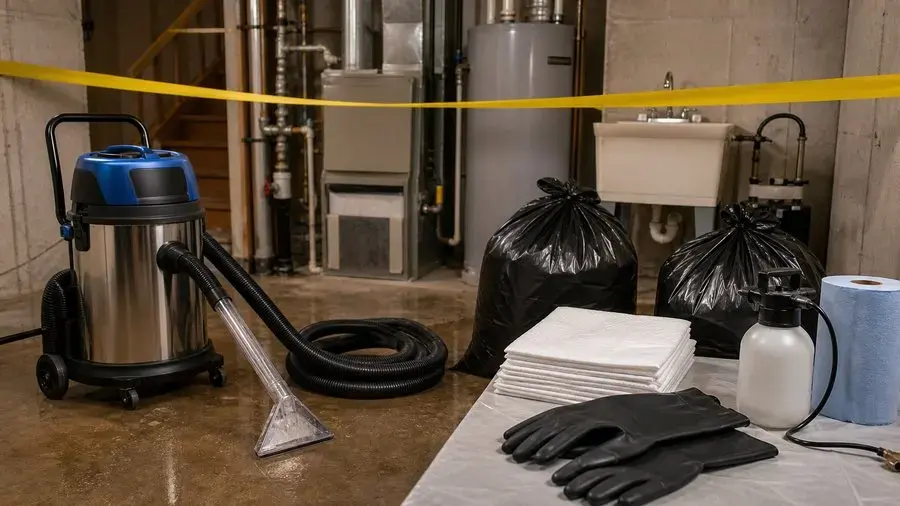
Sewage backup is Category 3 the moment it happens. In Hyattsville it usually arrives through the lowest drain in the house, a basement floor drain or a basement toilet, when an old clay or cast iron lateral clogs with roots or when heavy rain overloads the public sewer. The water carries bacteria and viruses, so the mitigation team treats it as a contamination job first and a drying job second.
Why sewage backs up in older Hyattsville homes
- Clay and cast iron laterals from the early 1900s cracked or filled with tree roots
- Floor drains and basement bathrooms that sit below the level of the street sewer
- Storm water getting into the sanitary sewer during heavy rain, which can push flow back into basements
- Grease and wipes building up in a shared line in garden apartment buildings
How a Category 3 cleanup is handled
The order of the work protects you and the rest of the house:
- The mitigation team sets containment with plastic barriers and runs HEPA air scrubbers so contaminated air stays in the work zone
- The extraction crew removes the sewage water and solids
- Porous materials the water touched, such as carpet, pad, drywall and insulation, are cut out and bagged, because Category 3 materials get removed, not dried
- The team cleans hard surfaces and applies an EPA-registered antimicrobial at its label dwell time
- The drying team dries the structure and verifies it with readings before the containment comes down
Why the cleanup is not a mop job
Household cleaners do not neutralize sewage pathogens in porous materials, and stirring the water spreads contamination through the house. Protective suits, respirators, containment and removal are what make the space safe again.
Protecting the rest of the house
Keep children and pets upstairs, avoid running water or flushing while the line is blocked, and leave the cleanup to a protected crew. A plumber or the utility clears the blockage; the restoration team handles everything the water touched, and the job often overlaps with basement flooding cleanup. For background on why sewers overflow in storms, see the EPA page on sanitary sewer overflows, and for general flood water safety see Ready.gov.