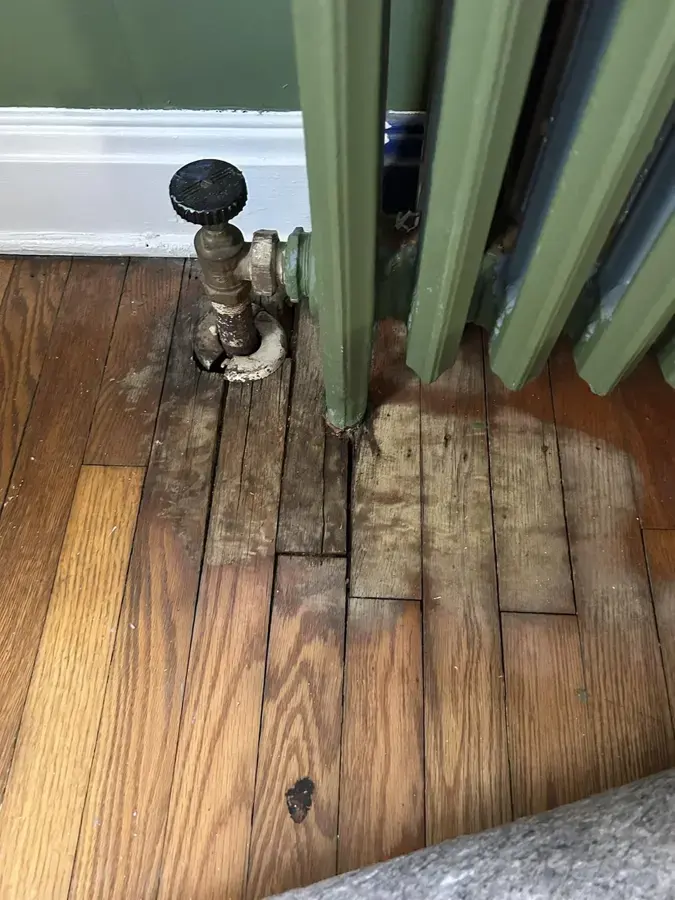
Radiator and boiler heat is one of the things that makes Hyattsville different from newer suburbs. Many homes in the historic district, around Route 1 and in older parts of Cheverly and Mount Rainier still run hot-water or steam heat through cast iron radiators, with a boiler in the basement. The system is reliable, but it is old: valve packings dry out, air vents spit water, pipe joints under the floor corrode and boilers leak at the relief valve. Because the water often drips slowly into hardwood and subfloor, the damage is usually bigger than it looks.
Common heating leaks
- Radiator valve packing and union joints that weep every time the heat cycles
- Air vents and bleed valves that spit water onto the floor
- Supply and return pipes running under floors and inside walls that corrode at the joints
- Boiler relief valves, expansion tanks and fittings leaking in the basement
How heating leak damage is dried
The tech who does the walkthrough maps the floor around each radiator and along the pipe runs with pinless meters and thermal imaging, because water from a heating leak spreads under the finish floor before it shows. Old tongue-and-groove oak and heart pine can often be saved: the drying team uses floor drying mats that pull moisture up through the boards, air movers and LGR dehumidifiers, and keeps the equipment running until the boards and subfloor reach a dry reference. Cupped boards often flatten as they dry.
Hardwood dries slowly on purpose
Drying hardwood too fast can crack and split the boards. The drying team brings it down steadily and tracks readings daily, which is why hardwood jobs often take five to ten days.
Boiler rooms and basements
A boiler leak in the basement usually needs extraction and slab or masonry drying, similar to basement flooding cleanup. A heating contractor repairs the system; the restoration team handles the water. For heating efficiency and safe operation, see the Department of Energy page on furnaces and boilers, and for why wet floors should dry fast, see the EPA mold pages.