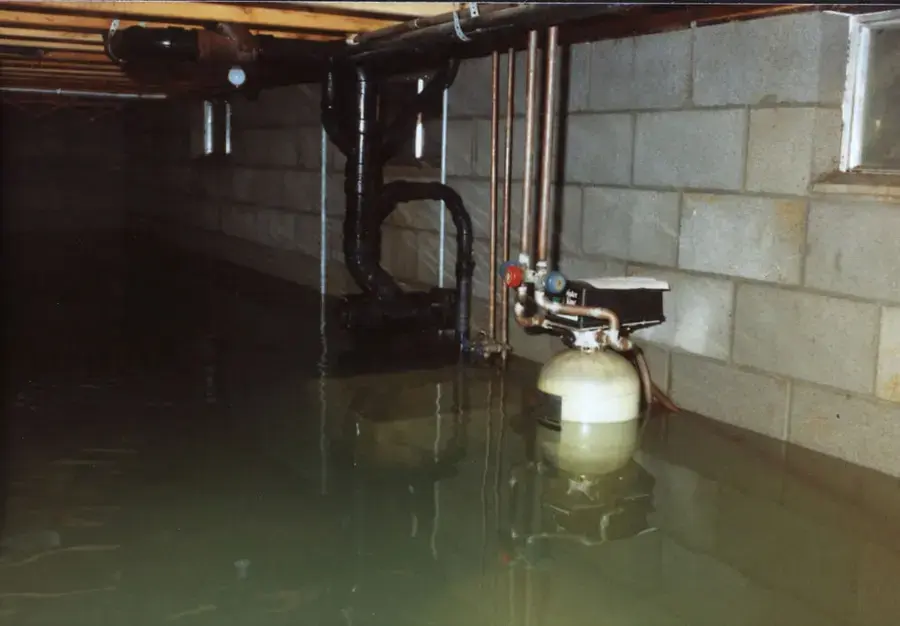
Sump pumps are common in Hyattsville basements that sit low or that were waterproofed with an interior drain system, and in newer homes and additions built near the Anacostia branches. The pump works quietly for years, then fails at the worst moment: a summer thunderstorm cuts the power, a float switch jams against the pit wall, or a heavy tropical rain simply delivers more water than the pump can move. The pit overflows and groundwater spreads across the basement.
Why sump pumps fail
- Power outages during the same storms that raise the water table
- Float switches that stick or tangle in the pit
- Worn motors and clogged intake screens on older pumps
- Frozen or clogged discharge lines, or discharge that runs back toward the foundation
How the basement is cleaned up
The extraction crew pumps out the standing water, then the tech who does the walkthrough maps moisture across the slab, walls and any finished rooms. Groundwater picks up soil and whatever sits on the basement floor, so it is usually treated as Category 2: wet carpet and pad are removed, hard surfaces are cleaned and an EPA-registered antimicrobial is applied where needed. The drying team then runs LGR dehumidifiers and air movers, adding desiccants for masonry walls, until the readings reach a dry reference.
A backup pump is the cheap fix
A battery backup or water-powered backup pump keeps the pit working through a power outage. A plumber or waterproofing contractor installs it; it prevents the most common sump failure in storm season.
Finished basements and repeat floods
In a finished basement, drywall is cut above the wet line where the meters say it is wet, and framing is dried in place. The work overlaps with basement flooding cleanup, and if the water came up through a floor drain instead of the pit, see sewage backup cleanup. For storm power outages, see Ready.gov power outages, and for flood safety, the National Weather Service flood safety page.