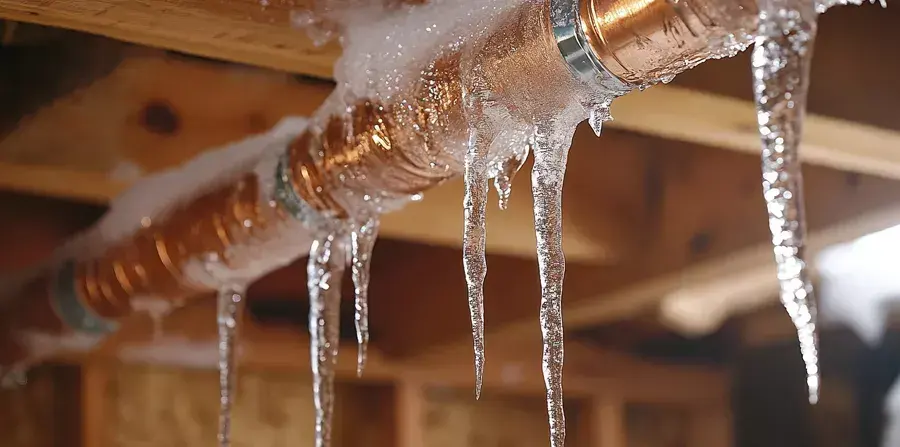
Hyattsville does not see Minnesota winters, and that is part of the problem. Many older homes were never insulated for a hard freeze, so when an arctic air mass settles over Prince George's County for a few days, pipes in exterior walls, enclosed front porches, kitchen sink cabinets on outside walls and crawl spaces freeze. Ice expands inside the line, the pipe splits, and the leak starts when the thaw arrives. The restoration team deals with that thaw-day water.
Where pipes freeze in Hyattsville homes
- Supply lines inside exterior walls of pre-war frame and brick homes with little insulation
- Enclosed porches and sunrooms added onto older houses, often with plumbing but little heat
- Kitchen and bath lines in cabinets on outside walls
- Hose bibs and lines near basement windows and crawl space vents
How freeze damage is cleaned up
Once the water is off, the extraction crew pulls standing water from floors and basements. The tech who does the walkthrough then maps the wall and floor with thermal imaging, because a split line inside a wall wets the cavity from the inside out. The drying team opens small access points at the base of wet walls and pushes dry air in, runs LGR dehumidifiers against the winter air, and records readings every day until the materials reach a dry reference.
Winter drying is its own problem
Cold air holds little moisture, so the drying team keeps the work area warm and closed and lets the dehumidifiers do the work. Opening windows in January slows the dry-out instead of speeding it up.
Preventing the next freeze
Letting a faucet drip on the coldest nights, opening sink cabinets on exterior walls and insulating porch and crawl space lines prevent most freeze breaks. If a pipe has frozen but not split, thaw it slowly with warm air, never an open flame. When it does split, the cleanup follows the same path as a burst pipe, with the drying plan tuned for winter. For cold-weather safety, see National Weather Service cold safety and Ready.gov winter weather.